Statistics · Dependence Modeling · Reliability
Understanding Dependence, Modeling Uncertainty, Advancing Statistical Inference.
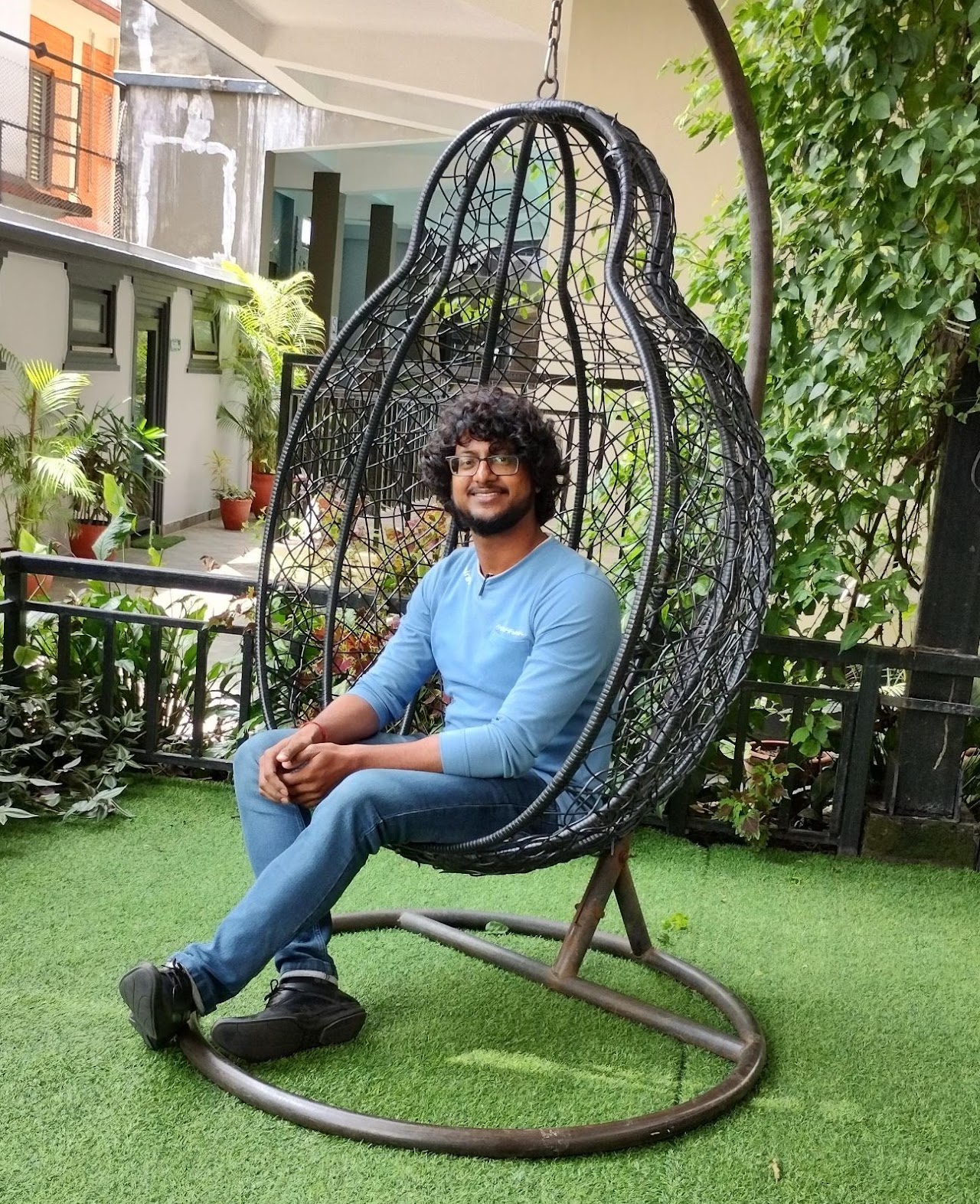
I am Dr. Sumangal Bhattacharya, an Assistant Professor in the Department of Mathematics at the National Institute of Technology Manipur, India. My research focuses on statistical inference, dependence modeling, survival and reliability analysis, and computational statistics — developing methodologies to understand complex data structures, quantify uncertainty, and address challenging problems through theoretical and computational approaches.
Where the research lives
/ 08 focus areasCopulas & Multivariate Statistical Models
Modeling complex dependence structures using copula-based approaches, with applications to correlated multivariate responses and flexible joint distributions.
Inliers, Early Failures & Count Data
Developing statistical models for multivariate count and lifetime data exhibiting multiple inflated observations, inliers, and early-failure phenomena.
Survival Analysis & Reliability Theory
Statistical modeling of lifetime and censored data, cure-rate models, aging intensity functions, and reliability measures for understanding failure and survival mechanisms.
Bayesian Inference & Computation
Bayesian estimation and uncertainty quantification using computational methods, including Markov chain Monte Carlo (MCMC), Hamiltonian Monte Carlo (HMC), and related simulation-based techniques.
Nonparametric Inference & U-Statistics
Developing distribution-free and nonparametric inferential procedures using U-statistics, resampling methods, lower partial moments, and jackknife empirical likelihood.
Machine Learning & Predictive Modeling
Exploring statistical and machine learning methods for estimation, prediction, and modeling complex relationships in data.
Statistical Learning & Time Series Analysis
Studying temporal dependence, stochastic processes, statistical learning methods, and forecasting techniques for time-dependent data.
Causal Inference & Latent Structures
Exploring causal relationships, unobserved heterogeneity, and latent variable models for statistical inference in complex observational data.
My current research explores nonparametric inference using U-statistics, lower partial moments, and reliability measures — including a median-based aging intensity function.
I am also interested in censored survival data, cure-rate models, latent variable modeling, causal inference, statistical learning, and time-series analysis. On the computational side, I work primarily with R, RStan, and Python, employing maximum likelihood estimation, Bayesian computation, Hamiltonian Monte Carlo, and other simulation-based techniques for statistical modeling and inference.
I have a deep passion for teaching and genuinely enjoy spending time in the classroom. I love discussing mathematical ideas, interacting with students, and exploring different ways of understanding a concept. I believe that a classroom is not simply a place to deliver lectures, but a space for curiosity, questions, meaningful discussions, and shared learning.
I enjoy exploring new ideas, learning from others, and engaging in academic discussions and collaborations that broaden my understanding of mathematics, statistics, and their applications.
Toolkit
Highlight
On Modeling Bivariate Lifetime Data in the Presence of Inliers — Annals of Data Science (2024). A copula-based framework for lifetime data that is robust to early-failure inliers.
DOI: 10.1007/s40745-023-00511-2